Grammy-Winning Jazz Icon, Passed Away At Age 70
 Amaya Brooks
Two-time Grammy Award-winning jazz singer Cassandra Wilson has died. She was 70.
Wilson died of natural causes at her home in Mississippi on Wednesday, Sept. 2, according to the Hinds County Coroner’s Office, which confirmed her death to PEOPLE.
“It is with profound sadness that we announce the passing of Cassandra Wilson, the Grammy Award-winning and legendary jazz artist,” Wilson’s longtime manager Robert Torre reported to radio station WBGO. “Cassandra Wilson transitioned peacefully at home, surrounded by family, close friends, and her manager.”
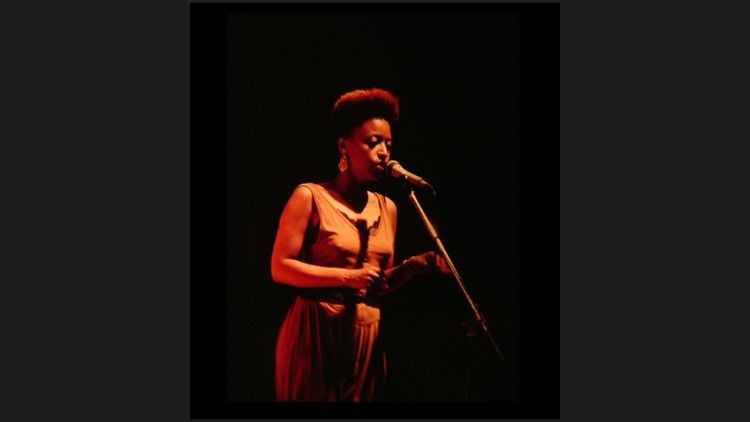
Her death brings to a close a remarkable career that lasted for decades and helped change the sound of modern jazz. Wilson was known for her deep, rich voice and her ability to mix jazz with blues, folk, country, R&B and other styles of American music.
Her Early Life in Mississippi
Wilson was born Cassandra Fowlkes on Dec. 4, 1955, in Jackson, Mississippi. Music was a major part of her childhood.
Her father, Herman B. Fowlkes, was a musician who played guitar and bass, while her mother, Mary Fowlkes, was a teacher who enjoyed Motown music. Wilson grew up listening to many different styles, including jazz and popular music.
She began taking piano lessons when she was just 6 years old. She later learned guitar and clarinet and began writing songs while still young.
Wilson attended Millsaps College before continuing her education at Jackson State University, where she earned a degree in mass communications. While in college, she also performed in coffeehouses and with local bands.
Her Mississippi upbringing would remain an important part of her music throughout her career.
Becoming a Jazz Star
In the early 1980s, Wilson spent time in New Orleans, where she worked with musicians and continued developing her sound. She later moved to New York City and became involved in the city’s growing jazz scene.
Wilson became a founding member of the M-Base Collective, a group of musicians connected with saxophonist Steve Coleman. The group was known for experimenting with jazz and mixing it with other musical influences.
Wilson eventually began building a successful career of her own.
A major turning point came when she signed with Blue Note Records in the early 1990s. Her 1993 album, Blue Light ‘Til Dawn, introduced her unusual style to a much larger audience.
Instead of limiting herself to traditional jazz standards, Wilson recorded songs influenced by blues, folk, rock and country. Her low contralto voice became one of the most recognizable parts of her music.
Two Grammy Awards
Wilson went on to receive four Grammy nominations during her career and won twice.
Her album New Moon Daughter earned the Grammy Award for Best Jazz Vocal Performance in 1997. More than a decade later, Loverly earned her another Grammy, this time for Best Jazz Vocal Album, in 2009.
Wilson worked with many respected musicians throughout her career, including The Roots, Wynton Marsalis, Elvis Costello, Bill Frisell, Terence Blanchard, Charlie Haden, Angélique Kidjo and Luther Vandross. She also appeared on Marsalis’ Blood on the Fields, which became the first jazz composition to win the Pulitzer Prize for Music. Over the course of her career, Wilson released more than 20 recordings as a bandleader, building a reputation as one of the most distinctive voices in modern jazz.
In 2001, Time magazine famously named Wilson “America’s best singer.”
Honored as a Jazz Master
Wilson continued earning major honors later in her life.
She received the Mississippi Governor’s Award for Artistic Excellence in Music in 2009 and was honored with a marker on the Mississippi Blues Trail the following year.
One of the biggest honors of her career came in 2022, when the National Endowment for the Arts named Wilson an NEA Jazz Master. The honor is considered one of the highest awards given to jazz musicians in the United States.
Her later work included the 2015 album Coming Forth by Day, which honored legendary singer Billie Holiday.
Through it all, Wilson remained closely connected to the musical traditions of Mississippi. Her ability to combine those roots with jazz helped her create a sound that was difficult to place into any single category.
Wilson leaves behind a career that stretched from small Mississippi music venues to some of the world’s biggest jazz stages. Her two Grammy wins, groundbreaking recordings and unmistakable voice helped make her one of the most important jazz singers of her generation.
According to NPR, Wilson is survived by her son, Jeris. She honored him through her music, dedicating the song “Out Loud (Jeris’ Blues)” to him. The track appeared on her 1991 album, She Who Weeps.